
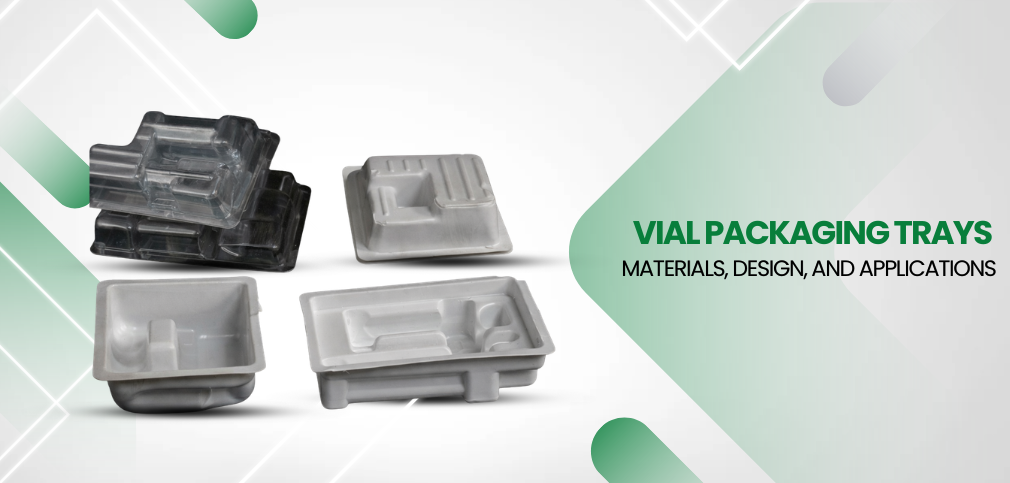
Let’s be honest, when people think about pharmaceutical packaging, vial trays are rarely the star of the conversation. They quietly sit in the background doing their job. But if you’re in pharma, diagnostics, or medical manufacturing, you already know this: a good vial packaging tray can make or break your daily operations.
Today, let’s discuss vial packaging trays in a straightforward manner. In this blog, we’ll explore what these trays do, why materials make a difference, how smart design improves functionality, and where experienced Vial Packaging Tray manufacturers like C&G Seals come into play.
What Exactly Is a Vial Packaging Tray?
In simple words, it’s a structured plastic tray designed to keep medical vials neatly arranged and safely handled. From manufacturing units to hospitals and diagnostic labs, these trays are used almost everywhere in the healthcare sector.
Their main job?
- Keep vials stable.
- Prevent breakage and spillage.
- Maintain hygiene.
- Make handling and transportation easier.
Simple idea, but critical impact.
Why Vial Packaging Trays Matter More Than You Think
Imagine hundreds of tiny glass vials moving through filling lines, labs, or storage areas. Without proper trays:
- Vials roll around.
- Glass cracks.
- Labels get damaged.
- Contamination risks increase.
That’s why pharmaceutical-grade trays are designed with precision, not as generic plastic holders. This is where an experienced Vial Packaging Tray manufacturer like C&G Seals becomes important. Our trays aren’t just containers; they’re part of a well-thought-out system
Materials Used in Vial Packaging Trays (And Why They’re Chosen)
Let’s talk about materials, because this is where quality really shows.
PVC (Polyvinyl Chloride)
- PVC is widely used in pharmaceutical trays because it’s:
- Durable.
- Cost-effective.
- Easy to mold.
- Resistant to moisture.
- HIPS (High Impact Polystyrene).
HIPS is often combined with PVC to add:
- Better impact resistance.
- Improved rigidity.
- Clear visibility.
Most of C&G Seals’ vial trays are made using PVC and HIPS, which is a smart choice for medical environments where durability and hygiene both matter.
And yes, transparent trays aren’t just for looks. They allow quick identification of vials, reduce handling time, and minimize errors.
Design Matters: More Than Just Compartments
Not all vial trays are created equal. A good tray design focuses on:
1. Deep Cavity Structure
Deep cavities ensure:
- Each vial sits firmly.
- Minimal movement during transport.
- Reduced risk of breakage.
2. Individual Compartments
Separate slots prevent:
- Vial-to-vial contact.
- Cross-contamination.
- Mix-ups in labs or pharmacies.
3. Rectangular, Stackable Shape
Stackability is a big deal in pharma logistics. Rectangular trays:
- Save storage space.
- It’s easier to box-pack.
- Improve handling efficiency.
We at C&G Seals design the trays keeping all these practical factors in mind, something you’d expect from a reliable Vial Packaging Tray manufacturer in Himachal Pradesh serving clients across India.
Common Types of Vial Packaging Trays (With Real Examples)
Let’s break this down using actual tray types offered by C&G Seals.
1. 20ml Vial + 20ml Ampoule Tray
This tray is ideal when you need to handle medium-sized medical vials.
Key features:
- 20 compartments.
- Deep cavity design.
- Made from PVC & HIPS.
- Transparent for easy identification.
Where it’s used:
- Hospitals.
- Diagnostic labs.
- Pharmacies.
- Pharma distribution units.
This kind of tray is all about stability, hygiene, and organized handling.
2. 2ML10 PVC Injection Tray
Small vials need extra care, and this tray is built exactly for that.
Key features:
- 10 separate slots.
- Compact size.
- Clear visibility.
- Strong yet lightweight.
Ideal for:
- Clinical labs.
- Injection vial storage.
- Small-dose liquid handling.
Since every vial has its own dedicated slot, the risk of spills or confusion is greatly minimized.
3. 5ML5 PVC Injection Tray
This one is perfect for slightly larger vials, but smaller batch handling.
Key features:
- 5 individual compartments.
- Easy to stack.
- Clear and durable.
- Designed for controlled environments.
Used commonly in labs and hospitals where precision and cleanliness are non-negotiable.
Applications of Vial Packaging Trays
Vial trays are used across multiple stages of pharmaceutical and medical workflows:
- Manufacturing units – during filling, inspection, and storage.
- Hospitals – for organized medicine handling.
- Diagnostic laboratories – to prevent sample mix-ups.
- Pharmacies – for clean storage and display.
- Transportation & logistics – safe movement of vials.
Wherever medical vials exist, trays are quietly doing their job.
What Makes a Good Vial Packaging Tray Manufacturer?
If you’re sourcing trays, don’t just look at the price. Look for:
- Quality of raw materials.
- Precision molding.
- Hygiene standards.
- Customization options.
- Consistent supply.
C&G Seals stands out because we:
- Use modern injection moulding techniques.
- Offer customizable tray solutions.
- Maintain high industry standards.
- Provide scalable, cost-effective packaging.
That’s why we are recognized as a dependable Vial Packaging Tray manufacturer serving pharmaceutical and industrial needs.
Maintenance & Handling: A Quick Note
Even the best trays need proper care:
- Clean regularly using approved solutions.
- Inspect for cracks or wear.
- Avoid overloading.
- Store in dry, contamination-free areas.
- Good trays + good handling = longer life and better performance.
Final Thoughts
They don’t catch your eye right away, but vial packaging trays are essential in pharmaceutical and medical settings. A well-made tray can make a real difference in terms of hygiene, handling safety, and overall efficiency.
If you’re looking for trays that are durable, well-designed, and pharma-ready, C&G Seals can really make a difference.